Tires
When is a semi tire done? Tread depth, pressure and Oklahoma heat
The legal tread minimums for steer, drive and trailer tires, how heat and low pressure kill casings, and when a retread makes sense.
October 8, 2026 · 6 min read · Atoka Tire & Service
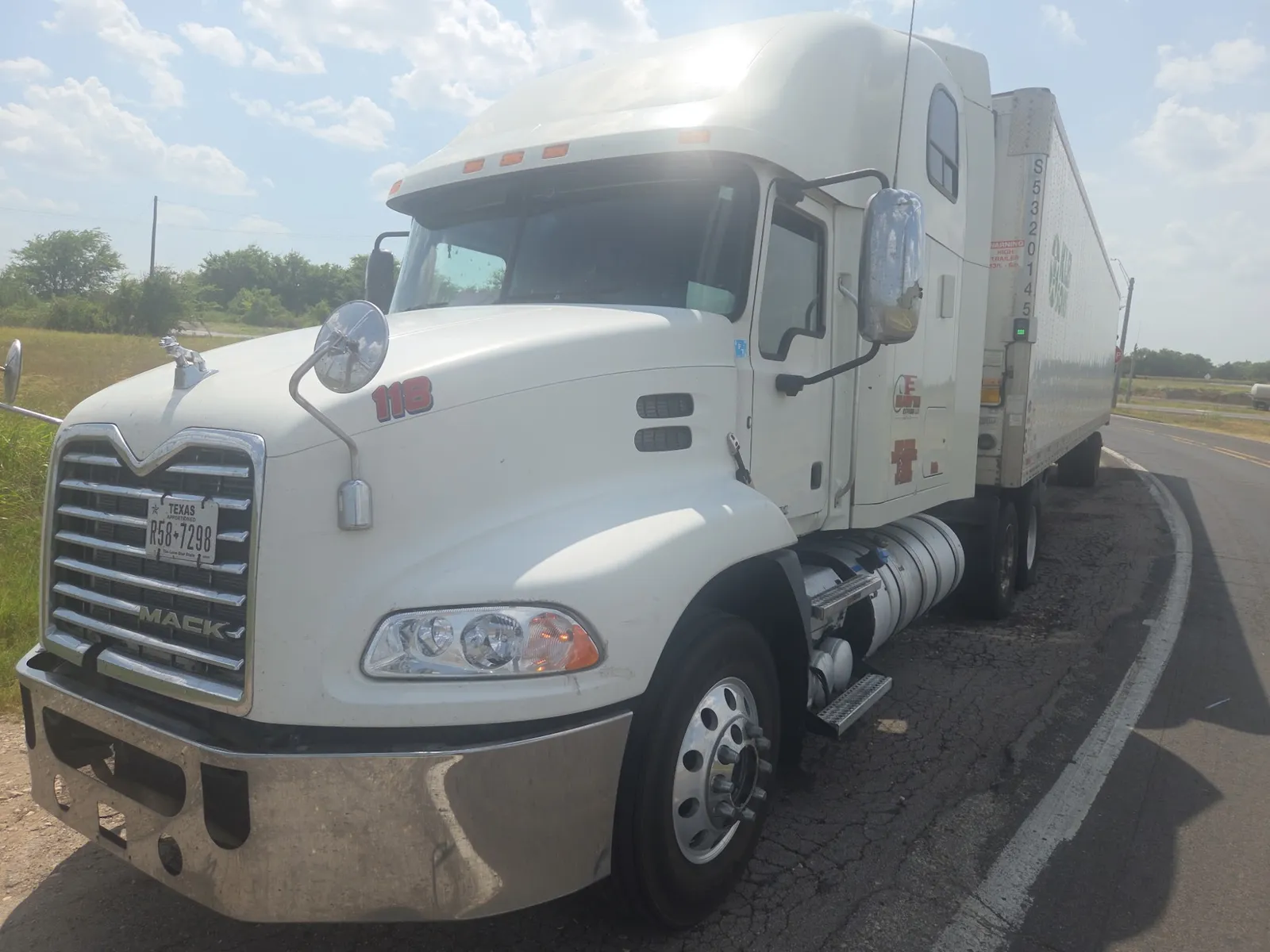
Most tire failures we see on a big truck didn't start that day. They started two weeks earlier with a slow leak nobody gauged, or a steer tire that was legal at the last inspection and isn't now. Here's what to check and how to tell when a tire has given you everything it's got.
The legal minimums
Federal rules (49 CFR 393.75) set two numbers every driver should know cold:
| Position | Minimum tread depth |
|---|---|
| Steer (front) tires | 4/32 of an inch |
| Drive and trailer tires | 2/32 of an inch |
Measure in a major groove, never on a tread-wear bar, and take the reading at the shallowest spot you can find. A tire can show 6/32 on the outside rib and 3/32 on the inside shoulder if the alignment is off. The inspector will find the 3/32. So should you.
Going below those numbers gets you a violation. Go low enough and the truck gets put out of service on the spot, which on a loaded run is the expensive version of a tire problem.
Steer tires deserve the most attention
A drive tire that lets go is a bad day. A steer tire that lets go can put you in the ditch. That's why we treat 4/32 as the absolute floor, not the target. Once a steer tire gets close to 6/32, start planning the swap so it happens at a shop and not on the shoulder of US-69.
Things that wear steers fast:
- Alignment that's out (watch for one shoulder wearing faster than the other)
- Loose steering components or worn kingpins
- Running low on pressure, even a little, for weeks
Pressure matters more than tread
Ask any tire tech what kills casings and you'll hear the same answer: underinflation. A tire running low flexes more, and flex makes heat. Heat breaks down the rubber and the bond between the tread and the casing. You won't see that damage from the outside until the tread comes off in one long strip.
A few habits that save tires:
- Gauge your tires cold, before the first run of the day. A hot tire reads high and lies to you.
- Inflate to the pressure the tire maker lists for your actual axle load, not a number someone told you years ago.
- Check duals as a pair. If the inside dual is 15 psi under the outside one, the outside tire is carrying the load for both.
- Thumping isn't a pressure check. Use a gauge.
What an Oklahoma summer does to tires
Pressure climbs as the tire heats up, roughly a couple of psi for every 10-degree swing. Out here, that swing can be big: a tire you checked at 6 a.m. in July is running on asphalt that's well past 130 degrees by mid-afternoon. That's normal and the tire is built for it, as long as it started at the right cold pressure.
The danger runs the other way in fall and winter. A tire set correctly on a hot August afternoon can be several psi low on the first cold November morning. If you haven't gauged since summer, do it now.
Retread or new?
Retreads get a bad rap from the rubber you see on the shoulder, but most of that "gator" debris comes from underinflated tires overheating, new or retreaded. A quality retread on a sound casing is a smart buy for drive and trailer positions.
Cost-wise, you'll usually see a new commercial tire run somewhere in the $400 to $600-plus range, while a retread on your own casing often lands around $150 to $250. On a trailer that eats tires, that difference adds up fast.
Federal rules don't ban retreads on a truck's steer axle (buses are a different story), but most fleets run new rubber up front anyway. We agree with them.
When to bring it in
Come see us if you notice any of these:
- Tread at or near the minimums above
- Cuts or cracks deep enough to show cords
- Bulges or bubbles in the sidewall
- Uneven wear across the tread
- A tire you keep "topping off" every few days
- Vibration that started after a hit or a curb
We sell and mount steer, drive and trailer tires, plus passenger and pickup tires, and we can come to you if you're stuck with a flat nearby. Book a tire check or call before you head our way so we have your size ready.